
Charge for Neglect, Not for Emptiness
October 13, 2026 · Dane G. Lasecki, Executive Director, Grow Green Bay
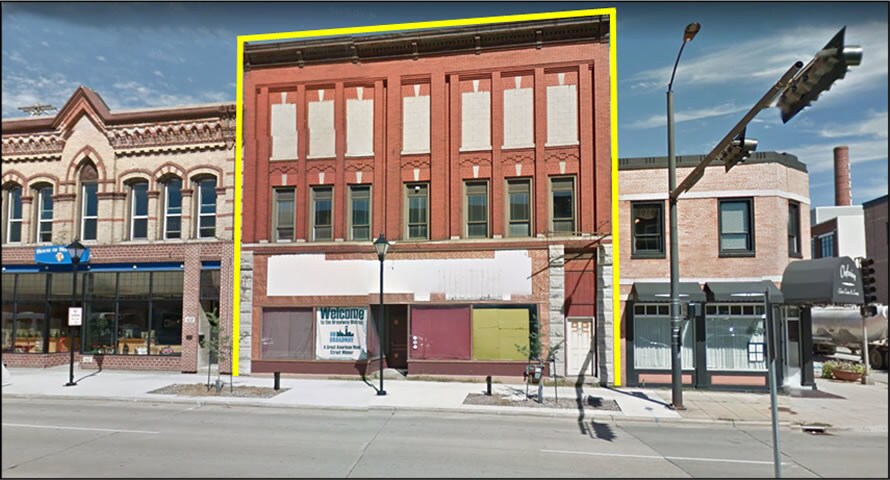
Green Bay wants fewer dark buildings. A rising vacancy fee isn't the best way to get there.
Green Bay wants fewer dark buildings. A rising vacancy fee isn't the best way to get there.
Every city has one: the building that's been dark so long you've stopped seeing it. In Green Bay, the historic building at 402 Dousman Street has sat dormant for at least 15 years. Buildings like it don't just sit there. They invite break-ins, worry firefighters, and quietly drain life from the block around them. The Wisconsin Economic Development Corporation puts the cost of a single vacant storefront at about $133,200 in lost economic activity.
So it's no surprise the Common Council wants to do something. On October 20, it will consider General Ordinance 24-26, which would require owners of fully vacant commercial buildings to register with the City. If a building stays empty, the owner would pay a yearly fee that doubles: $500, then $1,000, then $2,000, then $4,000 every year after.
The goal is right. Half of the tool is right too. The other half deserves a harder look.
The registry is the good part
Right now, the City doesn't know how many vacant commercial buildings it has. Officials acknowledge they mostly hear about the problem properties that generate police calls. When a fire breaks out in an empty building, responders may not know who to call.
A registry fixes that. Every vacant building gets a named local contact and an emergency contact, and the City finally gets a count. That's cheap for owners and valuable for everyone else.
The research backs it up. When economists at the Federal Reserve Bank of Atlanta studied vacant property registries in Florida, they found the ordinances more than halved the damage foreclosed homes did to their neighbors' property values. The researchers traced the benefit to upkeep: someone was finally responsible for keeping the buildings secure and maintained.
Registries work by making someone responsible for every empty building.
The fee is aimed at the wrong thing
The ordinance charges owners for emptiness, not for neglect. An owner who keeps a vacant building locked, lit, and up to code pays the same escalating fee as one who lets it rot. Green Bay already has building, fire, and nuisance codes for the second owner. The new fee mostly lands on the first.
It also lands unevenly. At Green Bay's 2025 combined tax rate, here's what the $4,000 top fee looks like next to a building's annual property tax bill:
| Building's assessed value | Annual property tax | $4,000 fee as share of tax |
|---|---|---|
| $250,000 | about $5,700 | about 70% |
| $1 million | about $22,700 | about 18% |
| $5 million | about $113,600 | about 3.5% |
For the owner of a big building, $4,000 is a rounding error, unlikely to change anything. For a family that owns one modest storefront, it's a serious new bill. Supporters will point out that $4,000 is about $333 a month, less than most commercial rents, and that's fair. But it's owed whether or not anything is wrong with the building, and it does nothing to fix whatever is keeping the space empty.
The same $4,000 fee is 3.5% of a big building's tax bill and 70% of a small one's.
A few details make it worse:
- The fee follows the building. Unpaid fees stay with the property when it sells. The investor who finally buys a long-empty building to bring it back could inherit the bill, and possibly the top fee level.
- Good-faith marketing gets 12 months. After a year of honestly trying to sell or lease, the owner pays anyway, recession or not.
- There's no warning before penalties. Per-day fines are common in city codes, but this draft lets fines of up to $5,000 a day begin without written notice and a chance to fix the problem.
- It may not hold up legally. Wisconsin law says a city fee must bear a "reasonable relationship" to the service it pays for. A fee designed to climb in order to change behavior looks a lot like a tax, and Wisconsin cities have faced challenges on exactly this point. Lake Geneva settled one in 2022 by cutting its fee and refunding owners.
Start by asking why buildings sit empty
To be fair to the ordinance's supporters: even a well-kept empty building costs the block. It brings no customers, no foot traffic, and no life to the street. That cost is real. The question is which tool fills the building fastest.
Before we price vacancy, we should understand it. A Strong Towns analysis and a San Francisco government review point to the same handful of reasons:
- Normal turnover. Most gaps between tenants fill within a year.
- Owners waiting. Some hold out for higher rents, a particular tenant or a better price, sometimes because their loans and valuations depend on keeping rents high on paper.
- Absentee or tangled ownership. Distant owners, estates and family disputes.
- Buildings that are hard to use. Code upgrades, accessibility work, build-out costs, and zoning rules can make a space expensive or impossible to lease as it is.
A fee might nudge the owners who are waiting. It does nothing for the building that can't be leased until someone spends six figures on a code upgrade, except make that building more expensive to hold.
A fee might nudge an owner who's waiting for a better offer. It can't fix a building that needs six figures of code work before anyone can move in.
The evidence on fees is thin. San Francisco ran commercial vacancy registries for years, and its own analysts concluded their effect on vacancy "cannot be determined." Enforcement depended on complaints, and most vacant storefronts never made the list.
Were the alternatives weighed?
There are a lot of ways to design a vacant building program. Cities have tried free registration, inspection-based fees, fees that fund façade grants, rebates when a building fills, higher charges only for buildings with repeat violations, and even vacancy taxes scaled to property value. Each has trade-offs.
Green Bay's draft picks one model. The public record doesn't show which others were considered, or why they were set aside. Before a full Council vote, residents deserve answers to a few basic questions:
- How many buildings would this cover?
- What will it cost to run, and how were the fee amounts chosen?
- What other approaches were considered?
- How will we know if it's working?
Good policy shows its work. Before a vote, we should know what else was considered and why this was chosen.
A better path
Other Wisconsin cities show there's more than one way to do this. Milwaukee requires vacant buildings to register for free and charges only when the City has to inspect. Menasha puts the money it collects into façade grants that help downtown buildings find tenants. Green Bay's draft follows South Milwaukee's steeper approach instead.
A stronger Green Bay ordinance would:
- Start the registry, hold the fees. Let the registry's first year show how big the problem is before any fee takes effect.
- Keep registration free. Every empty building gets a responsible contact.
- Go after neglect. Tie penalties to unfixed code, fire or nuisance violations, not to vacancy alone.
- Give buyers a clean slate. Don't make the person rescuing a building pay for the last owner's years of vacancy.
- Reward activation. Count pop-up shops and short-term leases as occupancy, and put any revenue toward façade and build-out grants.
- Check the results. Report back in two years on what the program actually did.
Green Bay's empty buildings aren't only a nuisance. They're some of the best opportunities this city has: existing structures, on existing streets, already connected to existing infrastructure. Our policy should make them easier to bring back, not more expensive to hold.
Register every empty building. Enforce against neglect. Reward the people who bring buildings back.
This article is adapted from the Grow Green Bay white paper Empty Buildings, Open Questions: Green Bay's Proposed Vacant Commercial Property Registry, which includes full sources, a review of the research, and a comparison of Wisconsin cities. Grow Green Bay is a nonpartisan public policy think tank focused on urban development, governance, and economic growth in Green Bay.